Inspection basics
What Is Included in a Professional Pool Inspection?
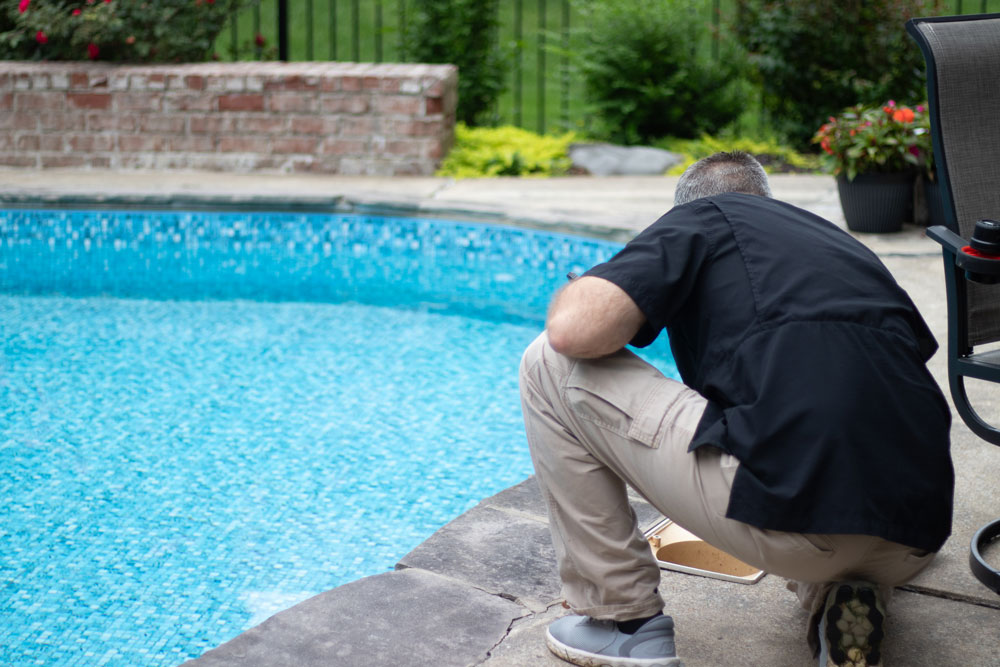
A professional pool inspection is a focused evaluation, not simply a check that the water looks good. Its usefulness depends on a clearly defined scope, access to the pool and equipment, and an explanation of what could and could not be evaluated.
Before booking, ask what the inspection includes for your particular pool. A residential pool, a separate spa, and a commercial aquatic facility do not necessarily call for the same scope or amount of time.
Visible and accessible pool components
The inspection can address visible pool surfaces and features, accessible circulation and filtration equipment, and operating conditions within the agreed scope. Observations about the surrounding pool area and accessible safety-related features may also inform the findings.
Not every component can be fully evaluated in every visit. Concealed plumbing, inaccessible areas, inactive equipment, and conditions that would require dismantling or destructive work need to be discussed separately. Read the written scope rather than assuming that every possible test is included.
Equipment operation and condition
Accessible equipment provides important context about how the pool functions. Tell the inspector about known problems, recent replacements, control-system issues, and any equipment that is currently shut down.
An operational observation describes conditions at the time of the inspection. It cannot predict the remaining life of every part or guarantee that equipment will continue to operate without repair. If a concern calls for a specialist evaluation, that recommendation is part of understanding the next step.
Conditions that can limit the visit
- The pool is winterized, covered, empty, or inaccessible.
- Power or water service is unavailable.
- Equipment cannot be operated safely.
- Visibility or access prevents a particular observation.
- A component requires testing outside the agreed scope.
Share these conditions when requesting the appointment. Kurt can explain their effect on the planned inspection and whether additional arrangements are needed. Do not attempt unfamiliar electrical, mechanical, or safety-related work yourself.
Water-loss analysis is a separate question
A pool inspection and a water-loss assessment serve related but different purposes. Elite offers an Anderson LEAKALYZER water-loss analysis priced per vessel. This assessment helps measure water loss under test conditions; it does not automatically locate the precise source of a leak.
If you are concerned about water loss, disclose the pattern, recent changes, and any known repairs. The right next step depends on the system and the conditions at the property.
Understand the findings, not just the checklist
Ask the inspector to distinguish an observation from a confirmed diagnosis. Understand which items may need a contractor's evaluation, which areas were not accessible, and whether further testing is recommended.
An inspection is not a warranty, an insurance policy, or a blanket certification that a property meets every requirement. Commercial operators should also understand that a private inspection does not replace required reviews or approvals by the relevant authorities.
Choose the scope before you book
Review Elite's inspection services and published fees, then share your pool type, address, and goals. A standard residential inspection starts at $500 for one vessel under 40,000 gallons; additional vessels and separately requested services have their own fees.
Contact Kurt to confirm the scope and schedule. A few details up front make it easier to plan a useful visit and avoid assumptions about what is included.
